

Broadcasting: Roya Eslami
BBC Comedy's Head of Development discusses why diversity drives success, her love of Bend It Like Beckham, and the rich ways her Iranian heritage shapes her perspective.

People often ask me how I find the time to write. They tell me it’s admirable and impressive, which I appreciate. But the truth is that I am extremely addicted to writing, so much so that I wrote this piece about it.
The same people often recommend that I use AI to help me transcribe these interviews. They respond to my reluctance by reassuring me that all the AI will do is write up the words spoken by myself and my guest. It won’t interfere or pass judgement on our conversation - it’ll just save me time.
But the truth that I come back to time and time again is that it’s often in the very process of listening back to these conversations that I am able to pinpoint what is so special about them. It’s a perspective I value too much to give away to AI. It was whilst listening to and writing up this conversation that I found myself pausing to reflect on the incredibly poignant way in which Roya talks about her Iranian heritage. She describes the sensation of being split in two; like there's a part of her that she leaves in Iran, a part that is served only by fleeting conversations had in Farsi, the smell of fresh bread and the act of washing rice. She talks about walking down her local high street and feeling at home. It makes me feel deeply sad. It also makes me feel lucky, lucky to have connected with Roya over a sensation that is usually so intangible and difficult to put words to.
Roya is an absolute powerhouse, and it was honestly a privilege to be let into the way she thinks about storytelling and TV. Whether you’re in the industry or not, I am confident that you will learn from Roya’s insightful observations on representation, the universality of comedy and why blurring the lines between social media and TV isn’t a bad thing.
“I bet if you asked a white guy which TV or film character they related most to when growing up, I doubt you could pick two guys in this space that would give you the same answer. But I think if you asked two brown girls from our generation, their answers would be the same.”
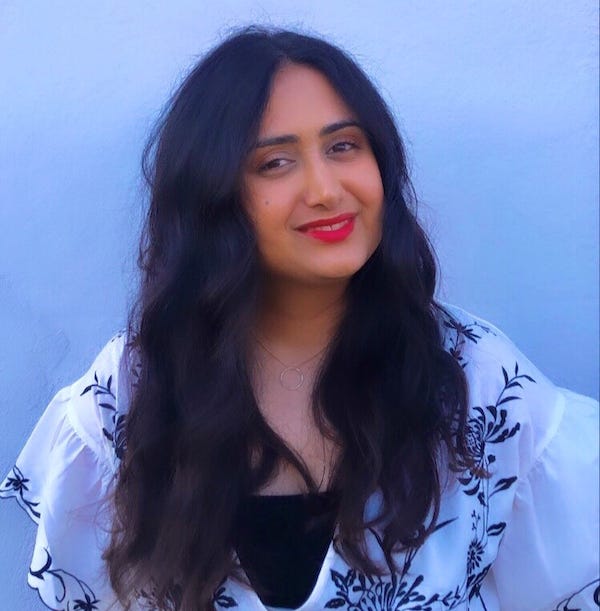
Head of Development for BBC Comedy sounds like a bit of a dream gig. Does it feel that way to you?
Yeah! I love working in development. It’s one of those jobs I never knew existed when I was younger. Growing up, I wanted to be an actor. From the age of five, my dad put me into drama classes because he wanted to make sure I had confidence. As a first-generation Iranian immigrant with English as a second language, he used to struggle giving presentations at work because he worried that he came across as less smart than he actually is. So making sure I was confident was really important to him as a parent. I’m really thankful for that because I think that half of any job is presenting confidently. It’s safe to say the drama classes worked because I’m definitely not shy!
I was going to apply for drama school but my dad encouraged me to get a degree. He didn’t care in what; he just wanted me to get a degree in something. So I studied English and Drama at Queen Mary’s. After that, I was planning on doing an MA in acting, but I quickly realised that I really don’t like rejection. Being an actor is so passive - you’re constantly waiting to be chosen and it can feel like you have very little agency. I think I would have struggled with that lack of control.
I had a similar path, actually. For me, a big part of wanting to act came down to a lack of understanding about what a career in TV could even look like. Acting can feel aspirational because it’s one of the only roles that you can tangibly see and imagine doing. Was that the case for you?
Definitely. My mum is a doctor and my dad worked in adult education and now runs a B&B. I didn’t know what a career in TV was, outside of acting. I got my first job in TV through Creative Access, who are absolutely brilliant. Through them, I got my first job as a Development Assistant with BBC Comedy. After that, the acting fell by the wayside, which I think was a good thing for me and the industry! I loved it, but I don’t think I was very good. In fact, I know I’m not good, because any time I’ve been a supporting artist I’ve looked directly down the camera. I remember when I was script editing Adult Material, I was a supporting artist in a few of the scenes and they literally had to shoot again!
A lot of my career was in script editing, which I absolutely loved. When I was working on Ackley Bridge I got to work alongside writers I’d admired for such a long time, like Suhayla El-Bushra. Kam Odedra was our Story Producer at the time and I remember that she was writing her first episode of TV. Now she’s written on shows like Hijack and All Her Fault. Being a script editor is an amazing job, yet it’s also one that so few people know about. I’m really passionate about demystifying the industry for younger people and helping them to understand how many opportunities there are behind the camera. When you’ve grown up without friends or family in the industry, you don’t have the same knowledge as those who have, but that knowledge is something you can build for yourself. That’s what I always tell people. It’s about reading scripts and watching telly, and thinking about what you like or don’t like and why.
I also got my first job through Creative Access and I totally agree that the impact they’ve had on increased diversity within the creative industries is absolutely brilliant. I’m interested in knowing, on both a personal and professional level, why representation matters to you?
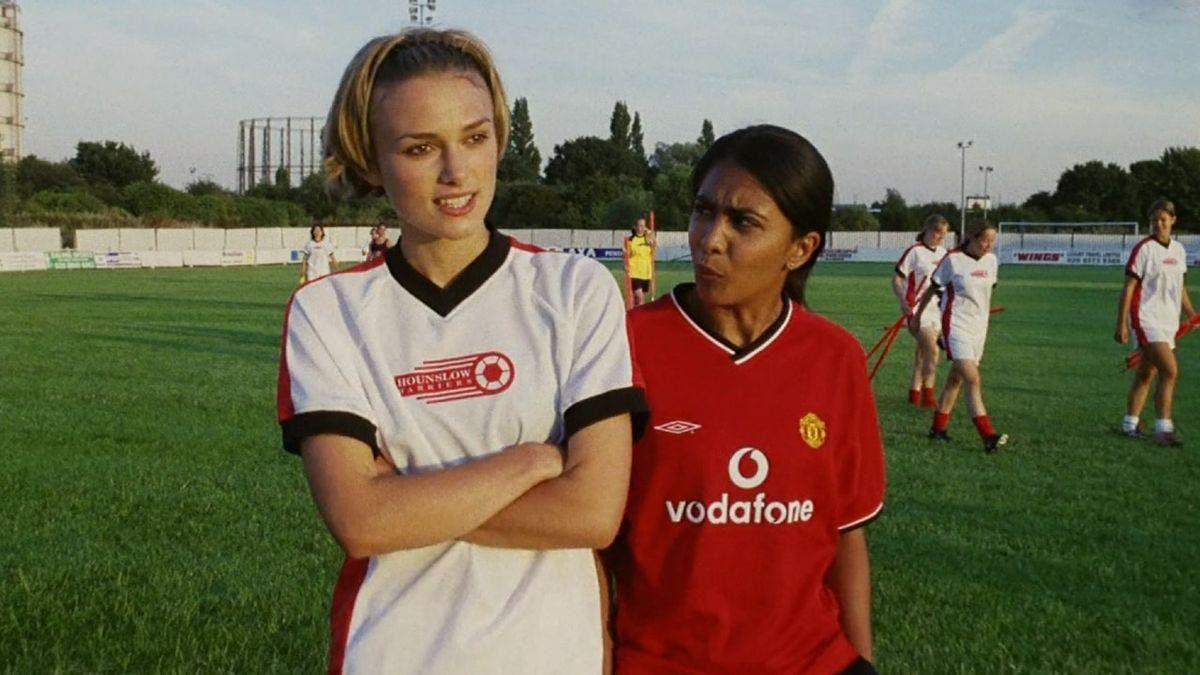
I worked on a show called DI Ray, starring Parminder Nagra as the lead. We were shooting in Birmingham and the amount of brown women who came up to Parminder to thank her for the impact she had on their childhood was incredible. For so many of them, myself included, seeing Parminder play Jesminder in Bend It Like Beckham was the only representation available to brown girls. She was definitely the only role model I had. To the point where I remember being like, should I take up football?! I think it’s so powerful that there was a brown girl who was beautiful and chose her own path. Her character never felt like it was reliant on stereotypes. It was also just such a brilliant movie! I think it’s the perfect sports rom-com.
For me, true representation is about demonstrating that there’s a myriad of ways in which your life can be. Whilst I think that film is amazing, I think it’s sad that Jess was the only role model I had growing up. I bet if you asked a white guy which TV or film character they related most to when growing up, I doubt you could pick two guys in this space that would give you the same answer. But I think if you asked two brown girls from our generation, their answers would be the same.
I love the way you describe representation. It’s not just about putting a brown girl in a film and hoping for the best; it’s about diversity of representation across a multitude of narratives and experiences. Bend It Like Beckham came out almost twenty-five years ago. Throughout your career, have you seen an improvement in representation on our screens?
I have seen an improvement, although it’s not quite at the rate you’d hope for. Something I’m noticing now, which is great, is that people are finally realising that representation is commercial and diversity is a good business decision. Produced on a budget of only £3.5 million, Bend It Like Beckham made nearly £60 million in profit, making it the most profitable film about football ever (at the time of release). And when you hear about Gurinder’s challenges getting the film made, that’s even more of an achievement. It’s a story of resilience.
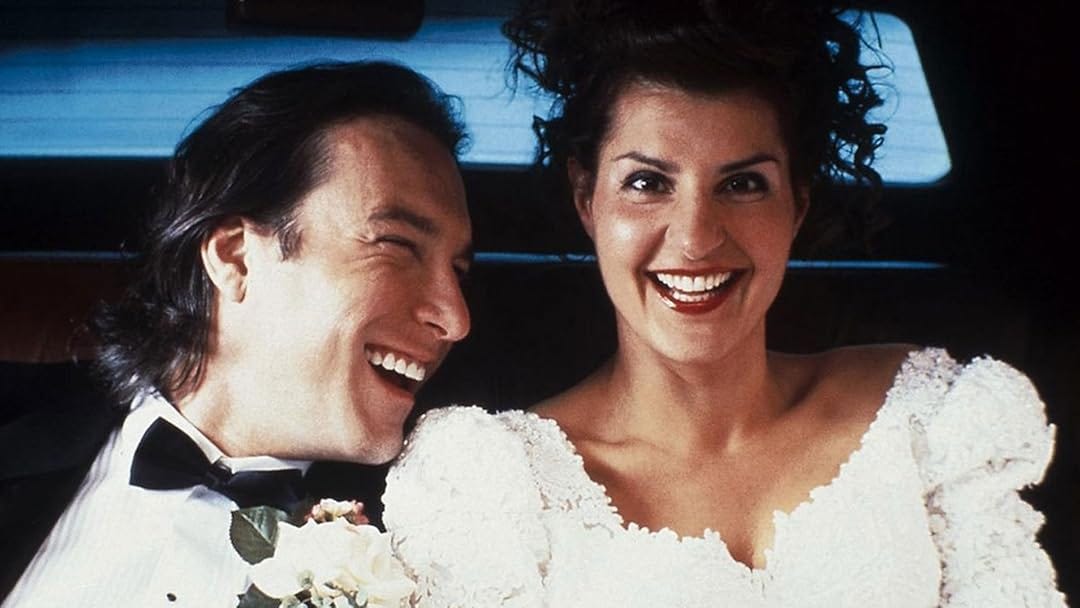
Another one of my favourite films is My Big Fat Greek Wedding. Again, that’s one of the most profitable independent films in history. Same with Crazy Rich Asians. Neither of those films are about my background, specifically, yet there’s so much in both of them that I relate to, particularly in terms of what it means to date cross-culturally.
The success of those films prove a point that diversity doesn’t mean non-profitability. It can be both. In fact, diversity can lead to profitability. The number one reason I work in TV is to entertain, and so demonstrating that representation and entertainment go hand-in-hand is really important to me.
You mentioned Gurinder’s struggle to get the film made. Why do you think it’s harder for people from marginalised backgrounds to find success within the industry?
I think you have to be more resilient and I think you have to explain things more. Sometimes the people you’re pitching to don’t know your world and they have to have faith that you do. Working at the BBC feels like an open place where people can explore their stories and have that support. There are shows that get made that might not be for an audience as big as Amandaland or Ludwig, but they serve an audience who isn’t typically being served. I never want to minimise the very real difficulties of working in TV, particularly at a time when there is a downturn in production and so many talented people are out of work, but I think it’s great that the BBC is a space where we’re able to offer writer-performers their first credit or their own show. We’re lucky to recently work with talent like Lucia Keskin, Phil Dunning, Adjani Salmon, Kat Sadler, Mawaan Rizwan, Kyla Harris and Michelle de Swarte.
I’m noticing a strong correlation between success on social media and commissions or castings on our screens. What’s your take on that?
I think the blurring of the lines between social media and TV will only benefit both. Seeing one or the other as the enemy isn’t helpful. There’s this TikToker called Charlotte The Nursery Nurse who’s just been cast in the CBBC show High Hoops, which I thought was really smart, and we’ve got Ed Jones from Crybabies in one of our shows. Gone are the days where the only way to get on TV is to have a sell-out run at the Edinburgh Fringe. Yes, it is still a bit like that, but it’s also amazing that we can find the next generation of creators online or at comedy nights across the country. What I love about our team is that everyone is always watching stuff, whether it’s online or in real life. We meet a lot of people off the back of that. At the end of the day, everyone just wants to make stuff and a rising tide raises all boats.
You’ve worked across both comedy and drama, but is comedy where your heart lies? If so, why?
I was raised on shows like Only Fools and Horses and The Vicar of Dibley. There’s a universality to comedy that I love. The show I would take to the desert island is Sex and the City. I used to watch it in sixth form as a respite to my A-Levels and it’s always stuck with me. Yes, they might be going to art gallery openings every other night and wearing Gucci and Dior, but the problems they’re facing are universal. It’s the same with comedies like Gavin and Stacey - I don’t know what it’s like to marry into a family from Barry, but I do know what it’s like to be caught in a culture clash between family and friends. I think that’s why Gen Z audiences are so obsessed with Friends and why the shows that do well on the iPlayer are family sitcoms like My Family and Outnumbered. Comedy is accessible. My dad always said, “you’re fluent in a language if you can understand the humour”.
I really relate to that, especially as someone who grew up watching a lot of Egyptian comedies. I definitely think that so much of a country’s culture is in its humour. Did you grow up with a strong Iranian influence in your household?
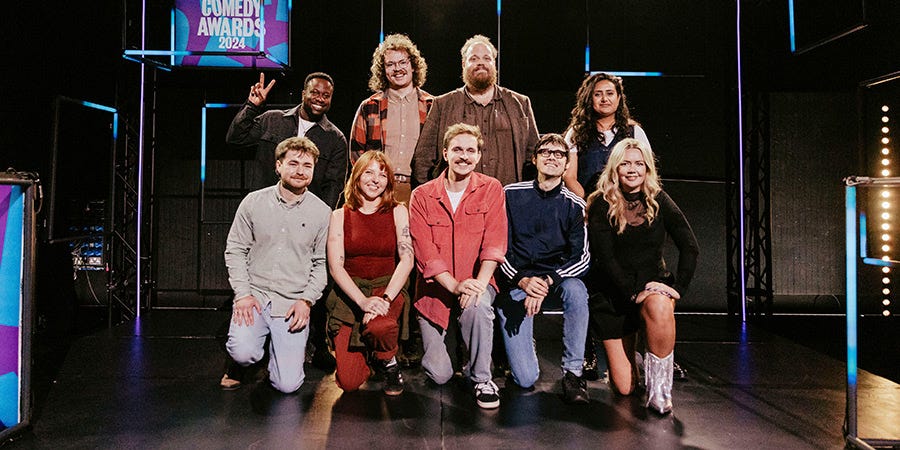
I’ve always spoken Farsi and I listen to a lot of Persian music and TV. There’s an Iranian Love Island called Eshghe Abadi which has gone viral. I loved watching that! I love Iranian cinema. Jafar Panahi has a new film coming out and Asghar Farhadi’s A Separation is a masterpiece. What’s special is that there are so many Iranians in British comedy. People like Kayvan Novak, Sarah Solemani, Omid Djalili and Shappi Khorsandi. Shappi judged the BBC New Comedy Awards in 2024 and it was so lovely to speak to her in Farsi and have that connection.
It’s lovely when your two worlds collide, but it’s also hard because it can feel like you’re split in two. This Iranian guy I met was showing me a video of his family celebrating his cousin’s birthday in Iran. He said how much he wished he was there. I totally knew what he meant. I feel like I leave a part of myself in Iran, a part I never get to see. A part that’s served only by having a conversation in Farsi with my eyebrow lady or buying Iranian sweets. Buying fresh bread and washing rice. Walking down the high street near where I live and passing an old man who smells like my grandad. Those things all feel like home.
I think that’s really poignant. Before I came here, I went to this Arabic shop near my office to buy dates. Every time I go in there the smell alone brings tears to my eyes. Sometimes I just stand in the aisle, surrounded by pickle jars, and cry. Have you always felt so close to your Iranian heritage?
I understand that so deeply. I’ve always felt proud to be Iranian and I used to go back all the time and visit, but - growing up in Kent - I wasn’t always as in tune with my Persian background as I am now. Your twenties are about making a name for yourself, but my thirties have been about going back to my roots. In recent years, I’ve felt a real closeness to my background and my family. I moved to an Iranian area and the high street alone reminds me of home. Whenever things are difficult and I’ve been really worried or anxious about my family, I’ll walk down the high street and feel close to them. In some respects, my dad is the most British man - he loves custard and pudding and Mrs Brown’s Boys - but he’s also incredibly Iranian. He talks to his family every day and loves cooking Iranian food. I love that. Being Iranian or Persian is as important to me as being British or being a woman. Putting that into practice feels especially important at the moment. I’m not taking it for granted any more.
Whilst publishing this interview, my thoughts are with the people of Iran and all the families and communities across the region living through conflict and carrying the human cost of war.
Loved this right up and makes me want to keep writing just to pitch to Roya, also so important to know theres women of colour in those spaces.
Another incredible piece. I love the notion of culture's being distinguished by their sense of humour.